
The government will restructure the National Investment Fund (NIF), where money received from disinvestment is parked, according to sources.
West Bengal has launched an Emerging Quantum and Semiconductor Technologies (EQST) section at CSIR-CGCRI to attract investments and position the state as a hub for next-generation technology. Minister Kalyan Chakraborti highlighted India's need to invest in these crucial sectors and outlined the state's plans to collaborate with institutions and leverage budget initiatives to foster research and start-ups.

Life cycle funds may suit people who are starting their investing journey. They may suit those who do not want to monitor their investments frequently. Busy professionals, beginners and delegators, who lack the time, information or interest to manage asset allocation actively, may find these funds useful.

Prime Minister Narendra Modi has called upon India's youth to dream big, assuring them of government support and resources, including a Rs 1 lakh crore Innovation Fund, to bolster the country's burgeoning startup ecosystem and drive its journey towards becoming a developed nation.

Russian President Vladimir Putin has proposed a new investment platform, based on the New Development Bank (NDB), to fund projects in trade, infrastructure, logistics, and technology across BRICS nations, emphasising that the grouping's expanding economic cooperation is not 'against anyone' but aims to advance members' national interests.

India's semiconductor sector has garnered USD 1.4 billion in total equity funding across 281 companies, with a substantial USD 701 million raised since 2025 alone, according to Tracxn data.

'Treating stock brokers as merchants for MDR is fundamentally misplaced.'

SBI Funds Management Ltd. is set to list on stock exchanges next week following its Rs 11,692 crore Initial Public Offering (IPO), which involves an Offer for Sale (OFS) of a 10 per cent stake by SBI and Amundi.

National Investment and Infrastructure Fund Limited (NIIF) has appointed Gauravjit Singh as managing partner to lead its global capital formation efforts. Simultaneously, PB Fintech's payment aggregator platform, PB Pay, has gone live, offering consolidated payment acceptance for merchants. In a move to enhance trade efficiency, the Directorate General of Foreign Trade (DGFT) has introduced open API integration for Certificate of Origin, allowing exporters to streamline their application processes.
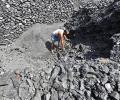
The Indian coal ministry announced that 147 commercial coal blocks auctioned since 2020 are expected to attract approximately 55,000 crore in capital investment, generate 490,000 jobs, and contribute significantly to state revenues.

Non-resident Indians are increasingly investing in luxury homes in India, driven by geopolitical uncertainties, particularly the Iran war. This trend is observed across major cities like Mumbai, Bengaluru, and the National Capital Region, with developers noting a significant rise in NRI pre-sales. While some see it as a temporary shift, others believe India is becoming a stable, long-term investment destination for NRIs, especially those from West Asia.

The Sports Ministry has invested over Rs 702 crore in the last three years to prepare Indian athletes for the upcoming Asian Games in Japan, featuring 310 debutants.

The rules require nuclear plant operators to maintain an insurance policy, financial security or a combination of both to cover civil liability for nuclear damage.

Liquidity stress in smallcap funds has fallen to its lowest level since February 2024, with the average time to liquidate 50% of portfolios dropping to 27 days in June from a peak of 44.2 days in January 2026, driven by a sharp recovery in smallcap stocks and increased trading volumes.

India's fresh investment plans in Q1FY27 surged 71 per cent to 14.77 trillion, primarily driven by four large nuclear power projects worth 6.5 trillion, according to investment monitoring firm Projects Today. Excluding these nuclear projects, fresh investment plans actually declined 4.27 per cent quarter-on-quarter.

The Biotechnology Industry Research Assistance Council (BIRAC) has chosen seven to eight biotechnology startups as the initial group to receive funding from the government's ~1 trillion Research, Development and Innovation (RDI) Fund, with an average investment of approximately ~25 crore per startup.

'Regulations give a particular minimum amount of shares to be given in the OFS or IPO -- without which one cannot do the IPO.' 'We got that number on the day of filing of updated DRHP -- sufficient for us to go live with the IPO.'

DIIs invested $22.8 billion in Indian equities in Q2CY26.

How well is your country's healthcare system staffed? We compare the density of essential healthcare professionals across countries, based on figures from World Population Review.

Noel Tata, chairman of Tata Trusts, has presented a proposal for the Shapoorji Pallonji (SP) group to sell its 18.37 per cent stake in Tata Sons for approximately 25,000 crore, aiming to address the SP group's liquidity needs without a public listing of Tata Sons.

Indian benchmark indices, Sensex and Nifty, traded marginally higher in early trade despite the US Federal Reserve's recent rate hike and indications of further tightening, with the National Stock Exchange's much-anticipated Rs 22,569-crore IPO also opening for subscription.

The National Payments Corporation of India (NPCI) stated that the Merchant Discount Rate (MDR) "is distributed only amongst the UPI ecosystem, to further invest into infrastructure resilience, innovation, cybersecurity (protecting the UPI infrastructure with banks and non-banks) and customer service."

FIFA has issued a clarification regarding its FIFA Forward Enterprise (FFE) proposal, stating it would 'never entertain' selling football to private parties and aims to ensure meaningful commercial ownership for all member nations, following strong criticism and boycott threats from UEFA and CONCACAF.
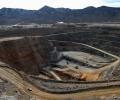
Union Mines Minister G Kishan Reddy announced that the Indian government is intensifying its support for private mining entrepreneurs seeking critical mineral opportunities abroad, working with the Ministry of External Affairs and appointing mineral officers in embassies to facilitate these efforts.
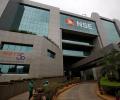
The National Stock Exchange of India's (NSE) mega Rs 22,569-crore initial public offering (IPO) was fully subscribed on the second day of bidding, driven by strong interest from qualified institutional buyers and non-institutional investors.

Investors opening new brokerage accounts must choose a broker suited to their style.

The government is introducing a 0.4% Merchant Discount Rate (MDR) on UPI person-to-merchant payments above Rs 2,000, effective October 15. This move ends the zero-MDR regime, aiming to fund UPI infrastructure and sustainability, as the previous government subsidy was insufficient to cover operational costs. Payments between individuals and most everyday merchant transactions will remain free.

The National Stock Exchange of India's (NSE) mega Rs 22,569-crore initial public offering (IPO) was subscribed 43 per cent on its first day of bidding, making it India's second-largest public issue after Hyundai Motor India's Rs 27,870-crore IPO in 2024.
The Finance Ministry has clarified that the decision to impose a 0.4% Merchant Discount Rate (MDR) on UPI transactions above Rs 2,000 was made independently, refuting claims of foreign influence. The ministry stated the policy aims to build a self-sustaining digital payments ecosystem, with MDR funding infrastructure and supporting small merchants.

China's Tiangong Ultra humanoid robot has set a new 100-metre sprint record of 8.86 seconds at the World Humanoid Robot Games in Beijing, significantly surpassing Usain Bolt's human world record of 9.58 seconds.

It is important to understand that the rupee's appreciation, driven by the 2013 special swap scheme, reduced India's import costs for petroleum, oil, and gold, points out Dr Ashwani Mahajan, National Co-Convenor, Swadeshi Jagaran Manch.

Finance Minister Nirmala Sitharaman stated that India is likely to sustain economic growth of 7 per cent or more in 2026-27, continuing the pace recorded since the Covid-19 pandemic, despite geopolitical uncertainties and supply-chain disruptions.

'The way the government behaves, sometimes I ask myself: Are not Tamils Sri Lankans too? Why do you discriminate so much?'

The National Stock Exchange of India's (NSE) mega Rs 22,569-crore initial public offering (IPO) opened for subscription, receiving 9 per cent bids on its first day, with strong participation from anchor investors.

This article details the quarter-century journey of BRICS, from its inception as an economic acronym by a Goldman Sachs economist to its current status as an expanded eleven-member international bloc. It highlights its growth, key historical moments, and the significance of its upcoming summit, particularly with Iran's renewed importance in discussions.

The Indian government has introduced a 0.4% Merchant Discount Rate (MDR) on UPI person-to-merchant (P2M) transactions exceeding Rs 2,000, effective October 15. This move ends nearly six years of fully free UPI payments, though person-to-person (P2P) transfers and small P2M payments remain free. The charges aim to bolster investment in UPI infrastructure, with specific exemptions and caps for essential sectors.

Australia's players union has joined global criticism of FIFA's proposal to bring private investors into the World Cup and other events, citing a lack of transparency and pressure on member associations to approve the $20 billion plan.

Axis Bank has opened 50 new branches across India, while Abakkus Mutual Fund has surpassed Rs 10,000 crore in AUM. YES Bank launched a new credit card for women, and J&K Bank partnered with HDFC Life to enhance its insurance offerings, showcasing significant growth and strategic developments in the Indian financial sector.

BRICS members have expressed 'serious concerns' over the unilateral imposition of trade and finance-related measures, including higher tariffs and non-tariff barriers, stating these actions distort trade and are inconsistent with WTO rules. The grouping also highlighted elevated risks to the global economic outlook due to geopolitical tensions, trade fragmentation, and protectionism.

Larger NGOs could no longer work with smaller ones, especially those organisations working on the ground that had no means of or expertise in raising money themselves, reveals Aakar Patel.
